
Do You Need College For A Career In Film?
- Jul 2, 2021
- 6 min read
Updated: Aug 1, 2022
My personal train of thought as a rising senior attending film school.

I've been interning with a video production company based in the Pittsburgh area for about a month now, and just the other day, my boss said this to me:
"I don't say this often, but you really don't need the rest of college to become a producer. You'd fair fine in the field from all the work we've seen you do."
This was a very nice compliment, but brought back the age-old question so many young filmmakers, including myself, ask themselves every so often: "do/did I need college to become a filmmaker?". For today's post, I'd like to give my two cents, as a rising senior still attending film school.
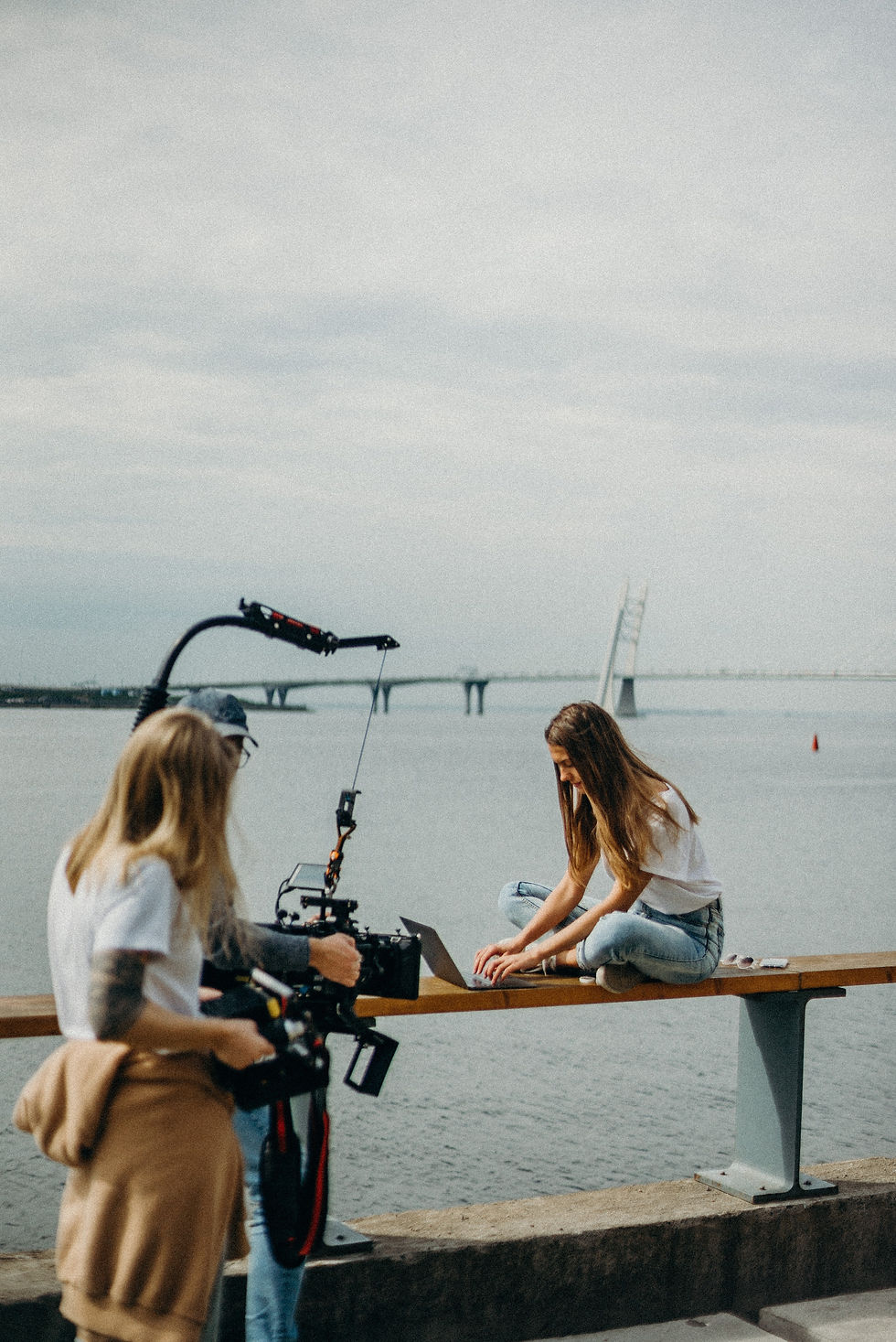
There are a lot of pros and cons to attending film school v. not attending film school. Due to the amount of grey area, I decided to highlight just a few of those points. In the end, choosing to go to school or not is a personal and financial decision that is up to each individual. Basically there is no right or wrong answer.
Pros of Film School
Pro 1: Great Starting Place for Inexperienced Folks
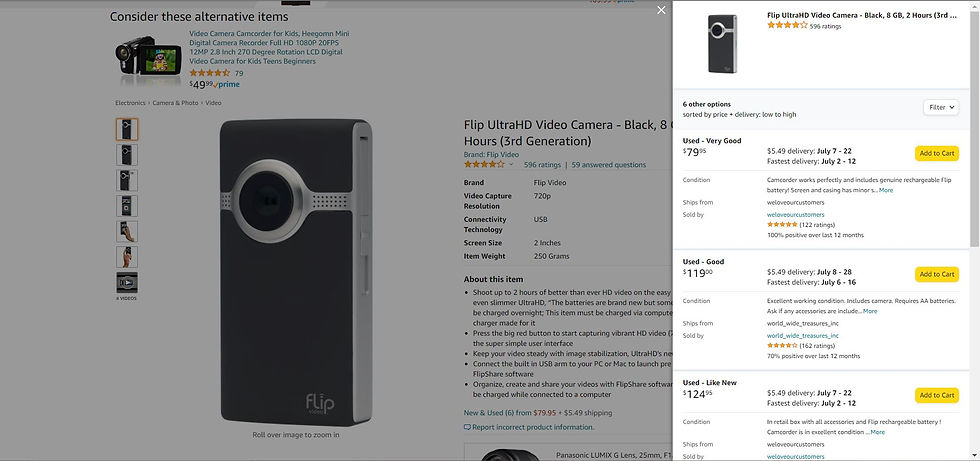
I went to high school in the middle of nowhere Pennsylvania where "Bring Your Tractor to School Day" was a thing. We had a lot of science-based classes, and many teachers pushed for students to go into agricultural or scientific fields. While we did have a class dedicated to TV and film, I never took it since it was more news-based. So, going into film school, I had never touched the Adobe Creative Suite and have only held a Flip Video Camera (when those were a thing).

Yep, this thing... popular in the 2010's.
Film school is the gateway for experimenting with equipment and software, and is a great place to start learning the collaborative process if you haven't been able to do so before. I'll be honest, the individuals who did not really gain much from the first two years of film school were the ones who have previously been on sets. People like myself, though, loved it. It's very freeing to be able to learn how to use programs, cameras, rigs, lights, and other things to make your visions more clear.
Learning the roles of different crew members on a set, whether it be an indie production or a big-budget one, really helps students find their niche as well. I came into school as a screenwriting major since I took many writing classes in high school, but quickly changed over to producer when I realized I have a thing for making connections, organizing folks, and putting productions into motion.
Pro 2: CONNECTIONS!
Connections and meeting people can be challenging as you get older. Through grade school, you constantly walk into the same building, every day, for a majority of the year, and spend time with the same people (unless your family moved around a lot and you were switching schools like crazy). I knew everyone in my grade during high school, plus whoever was a grade above me and below me. Granted, I had a small school, but those were my connections and my community.
College can open your eyes to a plethora of people and connections of all different types. The thing is, you have to work a little harder to make those connections. Going to college to any capacity can give you a leg up on connections, no matter how extroverted or introverted you are (granted, everyone has different experiences).
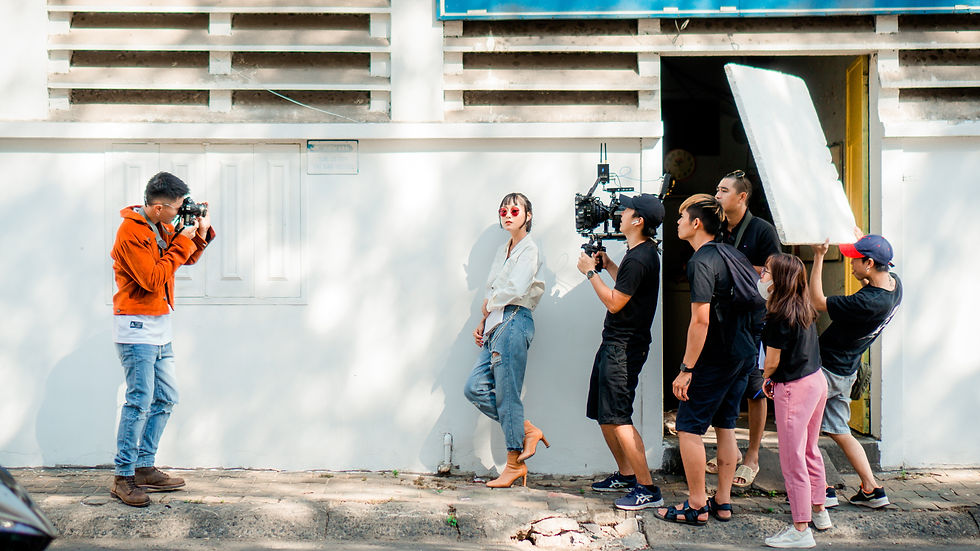
Filmmaking is such a collaborative artform, you can't not meet people. Photo by Lê Minh from Pexels.
Let's look at my current internship, for example. First, I moved to Pittsburgh, went to school, met professors, and made some friends in my classes. Eventually, I found some resource pages provided by the school, and found some Facebook groups. I joined those groups, and after about two years, I ended up taking up a paid gig. That paid gig looked shady, I'm not going to lie, but it was legit and I ended up working multiple times on a shoot. I was lucky, made a good impression and was offered an internship.
Connections are so important in creating and maintaining, especially because you may look to rely on some of the folks from your past to help you out in the future. On that note, be kind to the majority of people you meet through work.
Pro 3: Opportunities to Work With Expensive Equipment
Listen, equipment is expensive. Let's do a fun price comparison of my first video camera (that super-cool Flip Phone), v. the camera we were permitted to use freshman year: the Panasonic DVX200.
Alright, Flip Video Cameras go for between $70 and $150 (even though these are discontinued and have been for quite a while).
Panasonic's on the other hand...
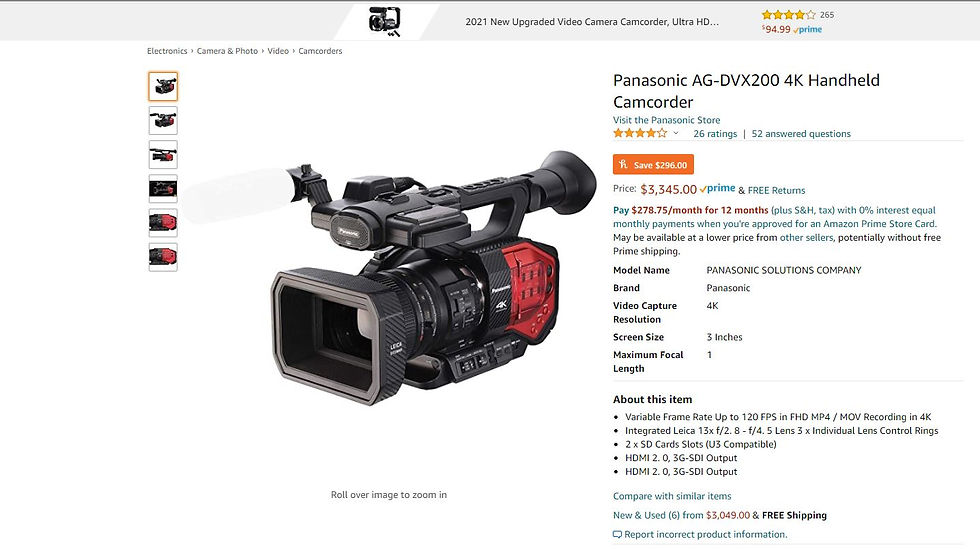

You can see the difference. The image quality is significantly better, and the options for audio and color functions are great as well.
So if you really want to try and get your hands on nicer equipment (I say nicer because school equipment can be broken or funky due to use over time), going to school can really aid you.
Cons of Film School
Con 1: School, Especially Art School, Is Expensive
College is expensive. Add on housing, grocery store funds (or a meal plan), toiletries, and anything else you may need money for, it really adds up. I will be owing over $20,000 in loans after college, and some people have more or less depending on their major. Not everyone can pay that, has to pay it over a long amount of time, or doesn't want to pay it!
Ouch.

Students after looking at their loans. Photo by Tara Winstead from Pexels.
Side Note: You know what else is expensive if you decide to invest in it yourself? Film equipment :)
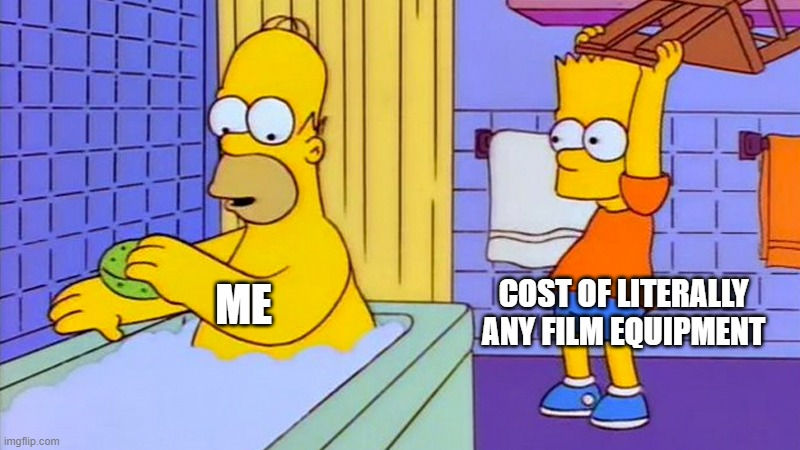
Anyways, the cost of college and learning skills there leads me to my next point...
Con 2: You Learn More Skills on Professional Sets
Think of it like a plumber or carpenter would: you are interested in a manual labor trade, so how do you get into it? Apprenticeships. You work and shadow a professional so you can eventually work efficiently for the company, work for a different company, or so you can start your own business.
The same applies for film. As long as you are in an area where film sets happen and you somehow get yourself on it, you're golden. People on sets, especially smaller ones, will show you how to utilize equipment, especially if you ask (at the right time, of course... you'll be able to get a feel for when good times to ask questions on sets are when you're there in person). The internet is an endless pit of information too, and you could strengthen your skills with the resources it offers.
The problem that many people run into, though, is they either don't have the proper connections starting out, don't know how to get their foot in the door, or are unable to relocate to areas where filming is at high-volume. If you grew up in Hollywood, California, great!- you could probably find the connections to get onto set. Your mom knows a camera guy from the local news station? Awesome- you can probably wedge your way in there somehow and shadow him to know how his cameras work. I had no idea these Facebook groups existed until I heard word through school.
This point is bittersweet, because while you could get away with not going to film school, it's hard to have the assets to wedge your way in if you don't fit these bills.
Again, to my next point...
Con 3: Relocation
Relocation is sometimes a must for the film industry. While filming and its many times is expanding across the states and the world, there are still central hubs that make it easier to find work and opportunities. As mentioned before, I came from a small area of Pennsylvania and relocated to Pittsburgh PA for school and work. Not super far, but far enough I can't travel home very often.
Relocation is not easy for everyone. It can be expensive, especially if there are more than one of you in a household, and kids or pets are involved. The area you may be looking to go to (cough cough HOLLYWOOD) could have rent way higher than your current rent. You may be on your own with little to no financial support from a partner, parents, or others, and can't really go anywhere to live our your filmmaking dreams. I get it, it's tough.
Yet, many times filmmakers have to go places like:
- California
- New York
- Florida
- Rhode Island
- Georgia
Just to name a few. But again, film is expanding out, and more opportunities seem to be popping up around many corners, so maybe there is hope at the end of the tunnel.
Conclusion
Film school is a decision you need to look at and think about what is best for you and your situation. There are so many factors to take into consideration when looking at colleges, but don't stress- when there's a will, there's a way!



Comments