
The Purpose of Experimental Film; If There is One
- Brian Reverri
- Mar 31, 2023
- 5 min read
Is my resistance to experimental film a biological adaptation rooted in primitive human anthropological history, or am I just dense? I’ll let the reader be the judge, but let’s imagine for a moment a traveling wise man at the beginning of human tribal society.

And what if this prehistoric caveman relied upon the tribes for food and shelter, a sort of quasi-symbiotic relationship? The stories would need to be interesting and provide entertainment, a distraction from the constant threat of death and dismemberment that occupied the minds of these Khosian tribes. Such an activity would be a welcome respite, escapism for cavepeople. The stories would hopefully be riveting, capturing the attention of children and adults alike, and, more importantly, be teachable moments.
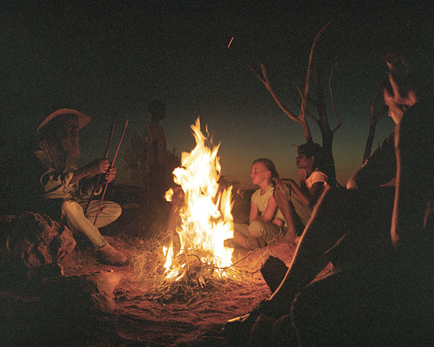
Fireside stories were our ancestors’ initial attempts at collective survival practices, in essence, a primitive form of cinema. Listening and learning could mean the very survival of the tribe. The tribes would pay this traveling shaman with food, shelter and protection from the harsh surrounding environment. And with this example, humans had their first compensated cinematic production.
The first troubadours in human existence were these nomadic, storytelling cavepeople. Stories had purpose. Rather than just to entertain the tribes, more than to distract from the near-constant threat of death (think The Croods), these fireside chats had lessons for survival to share among and between the various human outposts.

Etched into our subconscious at a molecular level, it's reasonable to assume that traditional storytelling had a purpose, a lesson that was clearly recognizable to the average caveperson. And what would happen if the sagely nomadic storyteller changed the form of his narrative? The lesson became unclear, the lens of reality becoming opaque from this avant-garde story structure.
I’d imagine an angry and frustrated village, cavepeople furrowing their brows in confusion, perhaps garnering spear-like weapons, the meaning lost to everyone except the storyteller. My point is, story structure as we know it; with a beginning, middle and end, with linear structure, may have a predisposed purpose deeply rooted in biological history.
So what then is the purpose of the experimental film, the avant-garde genre, the non-traditional narrative in cinema today? What’s the point? What purpose does it serve if not to confuse and frustrate? That’s a difficult question to pose without first asking another fundamental question…
What’s the point of film?
Is it to entertain, to distract, to bring attention to a nebulous issue, an advanced and confusing technology or social change brought on by demographic shifts in the population? Academics in the field of film believe it to be a re-evaluation of the traditional form of narrative; to present alternative forms of narrative. But for what purpose?
Case in point, Andy Warhol’s 8 1⁄2 hour black and white, non-narrative filming of the Empire State Building, entitled Empire. Nothing much happens. It may have been the filmmaker's ``intent” on simply showing the passage of time. Empire, made in 1965, had a profound influence on the avant-garde movement of cinema, and in 2004, The Library of Congress added Empire to the National Film Registry for being "culturally, historically, or aesthetically significant”.
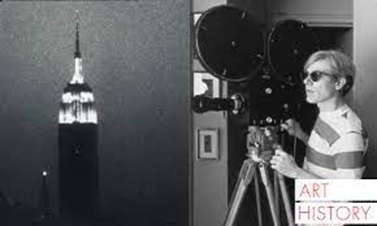
Art is subjective; I get this. I suppose a loose argument could be made as to why Empire would be constituted as art in its highest form (a.k.a. FILM), but 10 minutes into Empire, my attention pivoted to my immediate surroundings, mostly what other people were doing at the coffee shop. Time perceivably slowed, but I hadn’t furthered my understanding of this avant-garde style of cinema.
Maybe more time is warranted, or perhaps I’m too much of a troglodyte, but I’m hesitant in describing Empire as a film, perhaps straight-up resistant. My running hypothesis of why I didn’t gain further understanding of experimental film as an example of cinema is that the brain doesn’t want or need to interpret hidden lessons from these non-traditional, often weird-as-hell narratives because we have a biological incentive not to.
It's unreasonable to believe that humans have told stories since being able to make fire. I mean, what else was there to do before radio, cable and the internet. Traditional, linear, storytelling preferred by humans for thousands of years has wired our brains into this format of storytelling. It parallels life, with a beginning, middle and end.
David Lynch’s Twin Peaks has a semblance of storytelling recognizable to the average viewer though the viewer needs to get over, get through, the very surreal cinematography Lynch uses to tell his story. Regardless, Lynch’s story did have some through lines that represented a beginning, a middle and an ending, or sorts.
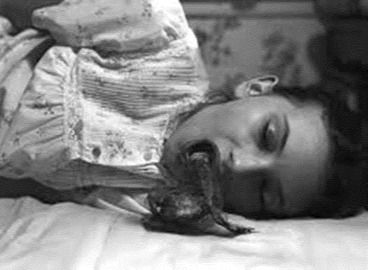
With Lynch’s Twin Peaks, there’s little to celebrate and more to contemplate at a subconscious level, and most humans probably don’t want to have an existential crisis brought on by an experimental narrative like Twin Peaks. Perhaps this has more to do with what’s going on in my own life than the film itself. It was just unsettling. But I digress.
Lynch doesn’t state precisely what meaning could or should be derived from his work. The meaning often is left up to the viewer and I guess that’s his point; take what meaning you want and run with it, and prepare to grab your spears.

Unlike the storytellers of old, Lynch had the ability to play with lighting, include surreal sound effects or incorporate bizarre special effects. He does this in abundance and to great effect. What may have read as a traditional screenplay can metamorphosize into an other-worldly experience, diluting the meaning of the story, which it did for me. My primitive brain didn’t want to extrapolate meaning, it wanted clarity and resolution.
Maya Derens’ Meshes of the Afternoon is considered a quintessential non-traditional narrative example. There’s no three-part story structure (an argument could be made against this, but check it out and see if you disagree). Certainly, no seven plot points exist.

There’s no dialogue, so this could never work with our tribespeople. And I’m always uncomfortable when watching “stories” having no resolution except to perhaps interpret as each individual sees fit, much in the case of the Twin Peaks example discussed above. Again, at the end, my metaphorical spear was drawn.
Perhaps using symbolic devices (knives in cakes or flowers at the end of a driveway…all references to Meshes) or open-ended events with no cathartic finale, can lead a person to a final destination, a self-reflected meaning. Or perhaps the lack of a climax is in itself the meaning the storyteller wishes to convey, a sort of morbid “what’s the point of all of this” value. It wouldn’t have helped our primitive ancestors survive and I don’t believe it does anything for modern human civilization. When it comes to cinema, I’d prefer not to use my brain in such a way to question my reality.
The older I get, the less elastic and more rigid my brain becomes, with the caveman's desirability becoming more prevalent. I want to believe that these alternative techniques in storytelling somehow push us forward as a species, transcending traditional norms and ideologies but I’m skeptical of this notion and again, resistant in defining such narratives as true, recognizable narrative.


Comments