
What is the DuVernay Test?
- K.J. Griffith

- Feb 3, 2023
- 4 min read
Updated: Mar 30, 2023
Let's be blunt: film has a really racist history. In the early days, films did not use black actors to portray black people. Depictions of white people in black face, yellow face, and red face were actively happening without repercussions until the 70's. Stereotypes of different races were ( and in some cases still are) the typical depiction in films and television. Even one of the most famous films of the early 1900's is known as the story that brought back the KKK in America. This is not just a problem of the past, however.

In a modern setting, sometimes visual media will favor a person of color, or POC, actor who is "lighter skinned" or "passing" to play a POC role. Some films and television shows also are guilty for what I call "POC Tokenism" where there is only one or two characters of color who are relegated to bit players. There may be claims that Hollywood is "diverse" but we know that diversity means more than what we are being given. This why the DuVernay Test was created.
Manohla Dargis, a film critic, introduced the test in an article back in 2016 online. The test was named after Ava DuVernay, a BIPOC woman director who is the first women of color to ever win a Golden Globe for Best Director. Many of her works, including Selma, A Wrinkle in Time, and When They See Us show people of color in major roles with a character arc not supported by a lead white actor. It is for this reason that this test was named after her.

To boil it down to the simplest of terms; the DuVernay Test is about representation of people of color in film and television. The test is a way to see if POC characters are given three dimensional roles with some kind of arc. Passing the test means that the film or series has a racially diverse story and/or exemplifies realistic POC characters.
There are three rules that the test must see in a film or series for it to pass the DuVernay Test:
1. There has to be at Least Two Characters of Color
The story must have at least two POC characters, and they cannot be romantically involved.
2. The Characters Must have Names
The POC characters in a story must have names and they need to be mentioned. No, it cannot be just mentioned in the credits.
3. The Characters Must Speak
POC characters must have dialogue, and their conversations cannot be about a white character.
Seems simple right? Not for Hollywood. Let’s take a look at some films and see if they pass the test.
Black Panther (2018): PASS

This one is kind of an obvious one! In Black Panther, our main character, T'Challa, must step forward to lead his people into a new future and must confront a challenger from his country's past in the advanced kingdom of Wakanda. The vast majority of this film has POC characters who developed without the help of non-POC characters. This passes the DuVernay Test.
Concussion (2015): PASS

Concussion is based on the true story of accomplished pathologist Dr. Bennet Omalu. In the film, he uncovers the truth about brain damage in football players who suffer repeated concussions in the course of normal play. Starring Will Smith and Gugulethu Mbatha-Raw, this film does pass the DuVernay Test (barely).
Nomadland (2020): FAIL

2019's Academy Award Winner for Best Picture, Nomadland, is a story about a woman in her sixties who loses everything in the Great Recession. She embarks on a journey through the American West, living as a modern-day nomad. Though this story is modern and a situation many lived through, there is no major POC characters in this story. This does not pass the DuVernay Test.
The Farewell (2019): PASS

The Farewell passes the DuVernay Test because it is the story of an Asian American Family who returns to China under the guise of a fake wedding. This is all to say goodbye to the family's matriarch; the only one who doesn't know about her terminal diagnosis. All the characters, if not most of them, represent the minority community of Asian Americans. It is a fully developed story about fully developed characters, which means this passes the DuVernay Test.
ELVIS (2022): FAIL
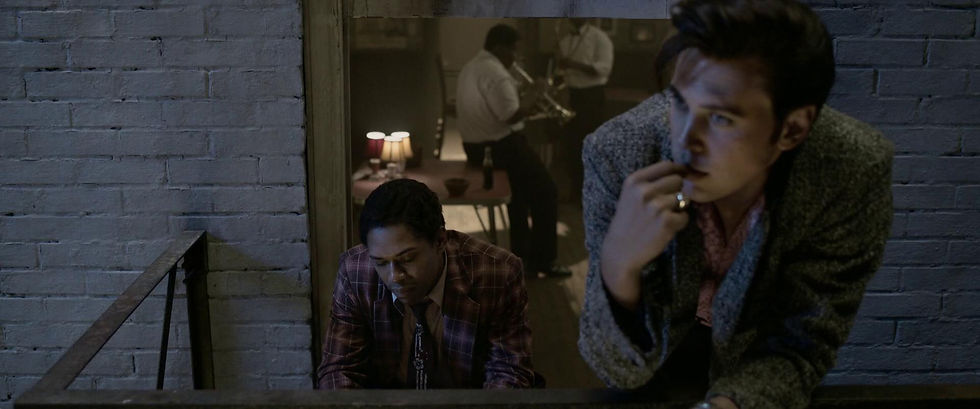
ELVIS is an epic, big-screen spectacle that explores the life and music of Elvis Presley through the complicated relationship with his manager, Colonel Tom Parker. This film, like the real life of Elvis, takes a lot of "inspiration" from black culture in the 50's and 60's*. However, unless you count singing, the named black characters do not speak to one another. The film doesn't pass the DuVernay Test.
Sister Act (1992): PASS?
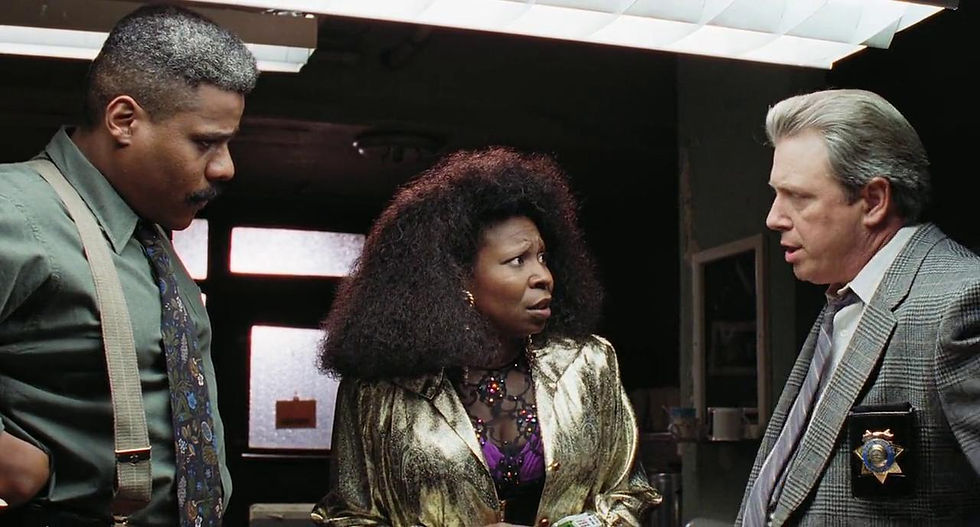
Sister Act is a favorite movie of mine and many others, but is it good representation of different people of color? This movie does pass the DuVernay Test, but it could be argued that it doesn’t. Deloris Van Cartier supporting singers from the club are both women of color. They are named by the mob members who come into the dressing room. However, the conversation between the women is about Deloris's relationship with the mob boss, a non POC character. Additionally, the character Eddie Souther only speaks to Deloris's character about the mob. So this film is in a gray area of the test.
Just like the famous Bechdel Test, the DuVernay Test is a much needed wake up call for Hollywood’s representation of all people. Even today, many series and films do not pass this test. Not that it's always necessary, but film and television should show a variety of stories, and faces that fit those stories. Racial diversity is important because it's a big part of what America is: a big melting pot of different people from all over the world. We as the audience should not only expect, but demand to see the diversity of America on the big screen.
Related Links
* Depending on who you speak with, there is a belief that Elvis stole songs amongst other things from black culture. This is an awkward and controversial topic that I believe I'm not the best to speak on, so check out this article for more information: https://www.usatoday.com/story/entertainment/music/2022/06/30/elvis-presley-complicated-relationship-black-music/7746069001/


Comments